 ALPHA
ALPHABy Elchin Azimli Author, Business Coach, and Managing Director of ALPHA Coaching & Consulting
The conflict between a modern individual’s digital persona and their authentic identity represents one of the most significant psychological paradoxes of our era: the widening chasm between the “ideal self” and the “real self.”
The Curated Showcase vs. The Human Reality
A digital persona is often a meticulously crafted, polished, and curated presentation staged behind a screen. It is not spontaneous; it is planned. It is not accidental; it is filtered. It is designed, above all else, to be liked. In this digital architecture, errors are minimized, hesitations are hidden, and pauses are deleted.
Real identity, however, exists beyond the glow of the screen—in the quiet space where we remove our masks and return to ourselves. It is the person we face in the mirror every morning: unedited, perhaps tired, often messy, and full of questions. There is no “undo” button in reality. Yet, this is precisely what makes it vibrant, genuine, and human.
In the world of social media and professional networking, we build storefronts for ourselves. We display our successes, our “correct” choices, and our linear growth stories. The message is clear: “Everything is fine; everything is under control.”
But the very elements that make us human—our doubts, our missteps, and our internal struggles—rarely find a place in this storefront. They are relegated to the “back room.” Consequently, our rich internal worlds are flattened into two-dimensional marketing posters.
The Illusion of Control and Internal Tension
Let’s be honest: none of us are frozen statues of success. Life is a dynamic process shaped by contradictions and fueled by the lessons of our failures.
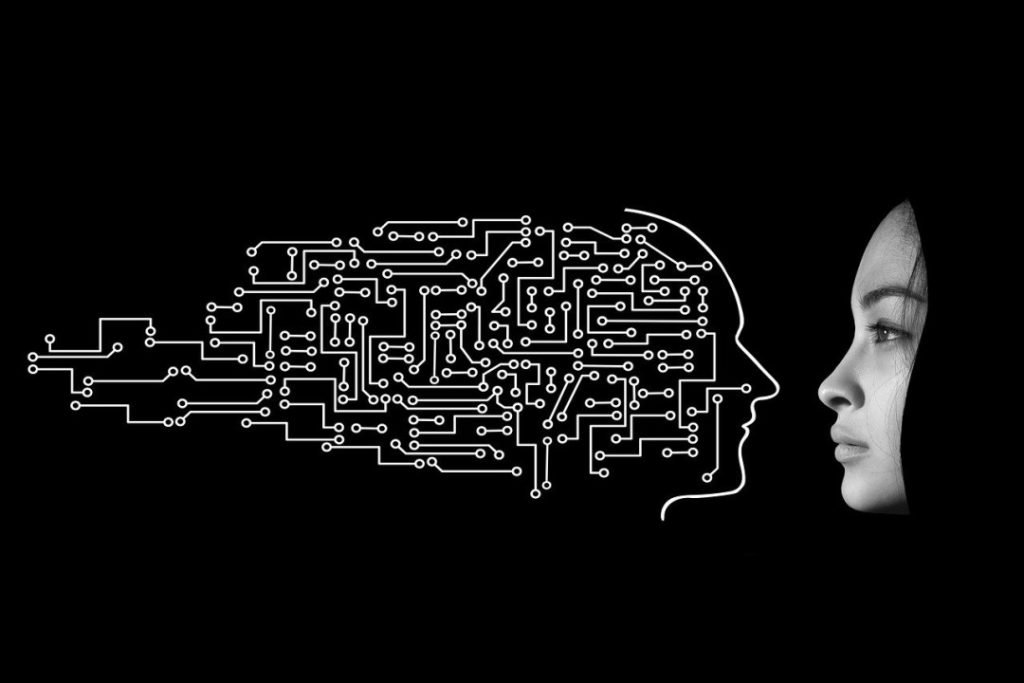
The digital world offers us the intoxicating ability to edit our existence: delete an awkward sentence, hide a perceived weakness, or post a “better” version of the truth. Over time, this creates a false sense of control—an illusion that life itself can be managed with the same precision as a digital profile.
But real life cannot be edited. It flows, it meanders, and sometimes it overflows. When this natural flow collides with the illusion of digital perfection, it creates a profound internal tension—a constant anxiety of “not being good enough.” This is the psychological fatigue of maintaining the distance between who we are and who we pretend to be.
Alienation: Seeking Applause for a Mask
As the gap between the polished mask and the real identity grows, we begin to crave applause not for ourselves, but for the artificial image we have created. This leads to a silent alienation—becoming a stranger in one’s own home.
We stop asking “Who am I?” and start asking “How do I look?” At this tipping point, while outward “success” may increase, genuine human connection diminishes.
The Path Forward: Integration, Not Escape
The solution is not to retreat from the digital world. Technology is an inseparable part of modern existence. The core issue is not the existence of the platform, but the intention with which we occupy it.
A digital persona gains true value when it is used for integration, not concealment. When our online presence harmonizes with our real identity, it becomes both sincere and influential. Digital life and real identity can only reconcile when we accept imperfection not as a flaw, but as the most natural aspect of the human condition.
Cracks and Light
The trap of the digital age is the relentless pressure to appear powerful, informed, and superior in the constant race of comparison.
We must remember: we are not made whole solely by our victories. We are defined by the moments we stumbled, the times we failed, and the internal battles we fought. The vitality of a tree is not found in the smoothness of its branches, but in the cracks, wrinkles, and scars on its trunk that mark the passing years.
A human being is most authentic through their “cracks.” As the saying goes, “That is how the light gets in.”
Our digital presence achieves its highest value when it reflects these truths rather than hiding them. In an era of sophisticated algorithms and high-definition filters, authenticity remains the most attractive filter of all.